PVC pipe is durable, affordable, and used in homes all across the valley. But Arizona heat is a special kind of test. When ground temperatures climb and the sun beats down for months, PVC behaves differently than it would in a milder climate. Understanding what the heat does to your drain pipe helps you protect it. Here is a clear look, from the team at Arizona Drain Experts.
Quick Answer: What Heat Does to PVC Drain Pipe
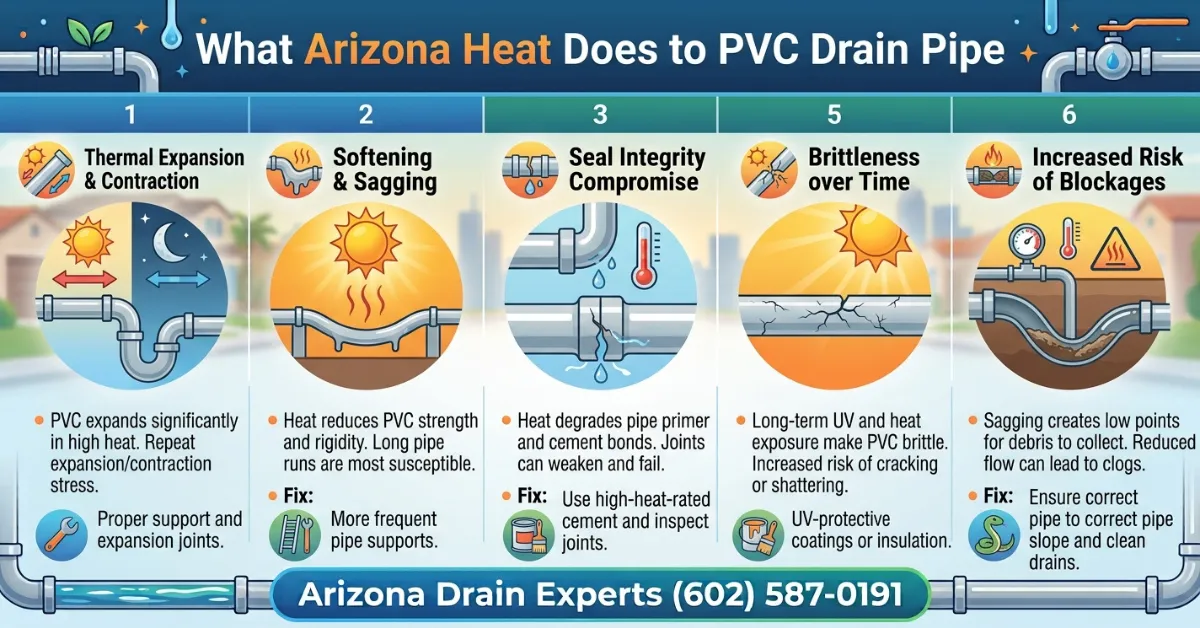
Arizona heat can soften, expand, and over time weaken PVC drain pipe, especially where it is exposed to direct sun or shallow, hot soil. Buried PVC is largely protected, but exposed sections such as vents, above-ground drains, and shallow lines are most at risk. Repeated expansion and contraction can stress joints, and prolonged UV exposure makes exposed PVC brittle. Proper installation and shielding exposed pipe prevent most heat-related failures.
How Heat Affects PVC
1. Thermal Expansion and Contraction
PVC expands as it heats and contracts as it cools. In Arizona, where surface temperatures swing widely between a summer afternoon and a winter night, exposed pipe goes through constant movement. Over years this cycling stresses joints and fittings, which is where leaks tend to start.
2. UV Degradation
Direct sunlight breaks down unprotected PVC over time. Sun-exposed pipe can discolor, become brittle, and eventually crack. This is why exposed drain and vent pipe should be shielded or rated and coated for UV exposure.
3. Softening in Extreme Heat
PVC is not designed for very high temperatures. Exposed pipe in full sun, or a drain line carrying repeated hot water, can soften slightly and lose some strength. This rarely fails on its own but adds to the stress from expansion and UV.
Which Pipes Are Most at Risk
| Pipe Location | Heat Risk |
|---|---|
| Deeply buried sewer line | Low, soil insulates it |
| Shallow buried line | Moderate, hotter soil |
| Above-ground exposed drain | High, direct sun and UV |
| Roof vent pipe | High, full sun exposure |
The pattern is clear. The more exposed the pipe, the higher the risk. Buried lines are mostly protected, though shallow lines in hot caliche soil face more stress than deep ones.
Signs of Heat-Related Pipe Damage
- Cracks or discoloration on exposed pipe
- Leaks appearing at joints and fittings
- Brittle, faded vent pipe on the roof
- Recurring drainage issues from a stressed line
If damage is underground, a camera inspection confirms whether a crack or offset is behind recurring problems.
How to Protect Your PVC
- Shield or paint exposed pipe with a UV-protective coating
- Insulate or wrap above-ground sections where practical
- Ensure proper support so expansion does not stress joints
- Have exposed and vent pipe inspected periodically
Good installation matters most. Pipe that is properly supported and shielded handles Arizona heat well for decades. For homes with older or damaged lines, our sewer line replacement cost guide covers the next step.
Why Arizona Drain Experts
We know how the valley’s heat affects plumbing, and we diagnose whether a leak or recurring problem comes from heat stress, soil movement, or a clog. Reach us at 2525 E Camelback Rd, Phoenix, AZ 85016, (602) 587-0191, or info@arizonadrainexperts.com.
Frequently Asked Questions
Q: Does Arizona heat damage PVC drain pipe?
A: It can, mainly through UV degradation and thermal cycling on exposed pipe. Buried lines are largely protected.
Q: Which pipes are most at risk from heat?
A: Above-ground drains and roof vent pipe in direct sun. The more exposed the pipe, the higher the risk.
Q: How do I protect exposed PVC from the sun?
A: Shield it, use UV-rated pipe, or apply a protective coating, and make sure it is properly supported.
Q: Can heat cause my underground sewer line to fail?
A: Deep lines are mostly insulated by soil. Shallow lines in hot caliche soil face more stress, though soil movement is usually a bigger factor underground.
Final Thoughts
Arizona heat is hard on exposed PVC, mainly through UV and constant expansion, while buried lines stay largely protected. Shielding exposed pipe and ensuring good support prevents most heat-related failures. For a leak or recurring drain problem, call Arizona Drain Experts at (602) 587-0191.