If you run a restaurant, cafe, or any food business in Arizona, a grease trap is not optional. It protects the sewer system from the fats, oils, and grease that would otherwise clog public lines, and the county enforces the rules. Get it wrong and you face fines, failed inspections, and expensive backups. Here is a clear guide to Arizona grease trap rules by county, from the team at Arizona Drain Experts.
Quick Answer: Arizona Grease Trap Rules
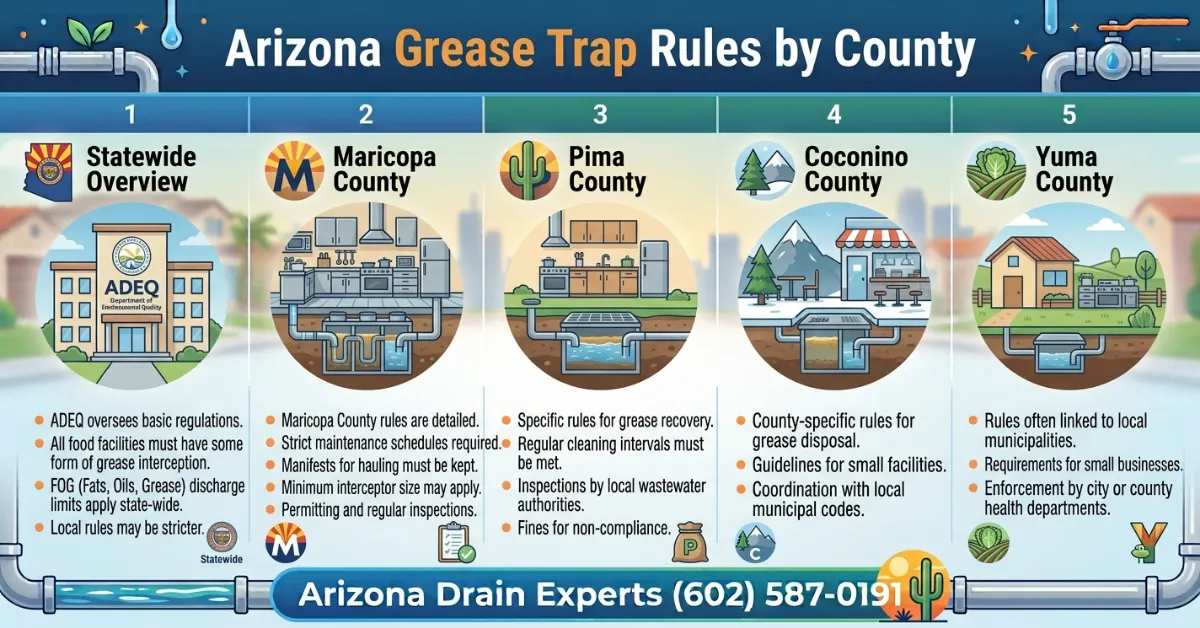
In Arizona, food service businesses must install and maintain a grease interceptor or trap, and the specific sizing, cleaning frequency, and reporting rules are set at the county and city level. Maricopa County and its cities enforce grease control through their wastewater and pretreatment programs. Most jurisdictions require regular cleaning, record keeping, and periodic inspection. There is no single statewide rule, so you must follow your local program.
Why Grease Traps Are Required
Fats, oils, and grease, known in the trade as FOG, are the number one cause of commercial sewer blockages. When they cool inside a pipe, they harden and trap everything else flowing through. A grease trap captures FOG before it reaches the sewer, protecting both your lines and the public system. Because a single non-compliant kitchen can clog a shared main, counties enforce the rules strictly.
Maricopa County and Local Rules
In the Phoenix metro, grease control is handled through each city’s wastewater pretreatment program, which operates under county and state oversight. Cities such as Phoenix, Mesa, Scottsdale, Tempe, Chandler, and Gilbert each publish their own requirements for grease interceptor sizing, installation, and cleaning. While the details differ, the core obligations are consistent.
Common Requirements Across Arizona Counties
- Proper sizing based on the kitchen’s flow and fixtures
- Regular cleaning, often when the trap reaches a set capacity of grease and solids
- Record keeping of every cleaning and disposal
- Proper disposal through a licensed hauler
- Inspection access for the local pretreatment program
Many cities use the common industry standard of cleaning when the trap is one quarter full of grease and solids. Always confirm the exact threshold and frequency with your local program.
Interior Traps vs Exterior Interceptors
| Type | Best For | Typical Cleaning |
|---|---|---|
| Under-sink grease trap | Small kitchens, low flow | More frequent, smaller capacity |
| Exterior grease interceptor | Full-service restaurants, high flow | Scheduled pumping, larger capacity |
Larger kitchens usually require an exterior interceptor sized to their flow. Your city’s plumbing code and pretreatment program set the required size.
What Happens If You Do Not Comply
- Fines from the local pretreatment program
- Grease backups into your kitchen during service
- Emergency drain costs on top of the fine
- Risk to your health permit and operating status
A grease backup during a dinner rush is one of the worst emergencies a restaurant can face. Regular maintenance is far cheaper than the alternative. When grease does build up in the lines beyond the trap, hydro jetting is the most effective way to clear it.
Staying Compliant Is Simple
- Confirm your city’s sizing and cleaning requirements.
- Set a regular cleaning schedule before the trap reaches capacity.
- Keep records of every service and disposal.
- Use a licensed hauler and a qualified drain service.
Why Arizona Drain Experts
We service commercial kitchen lines across the Phoenix metro, help you keep grease lines flowing, and clear grease-clogged drains with hydro jetting when buildup gets ahead of you. Reach us at 2525 E Camelback Rd, Phoenix, AZ 85016, (602) 587-0191, or info@arizonadrainexperts.com.
Frequently Asked Questions
Q: Are grease traps required in Arizona?
A: Yes. Food service businesses must have a grease trap or interceptor, with rules set by your county and city pretreatment program.
Q: How often must a grease trap be cleaned?
A: Many jurisdictions require cleaning when the trap is about one quarter full of grease and solids. Confirm your local frequency.
Q: Do grease trap rules vary by county in Arizona?
A: Yes. There is no single statewide rule. Each county and city sets its own sizing, cleaning, and reporting requirements.
Q: What clears grease already in the line?
A: Hydro jetting is the most effective method for removing grease coating the inside of a pipe.
Final Thoughts
Arizona grease trap rules are set by your county and city, and compliance protects your kitchen from costly backups and fines. Know your local requirements, keep to a cleaning schedule, and keep records. For commercial drain service, call Arizona Drain Experts at (602) 587-0191.